Reaching the Truth with Blade Runner 4: Eye and Talon
2018 Books & FictionOne experimental, dangerous, and possibly-illegal medical procedure that allows me to download digital information directly into my brain later, I’ve done it. I’ve gotten through the last of the Blade Runner sequel novels.
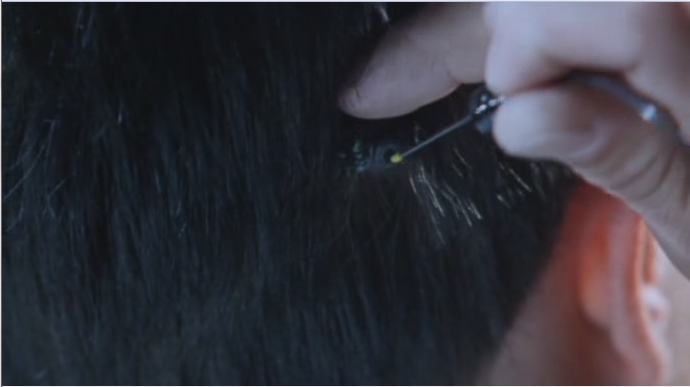
Fortunately, mentally poring through the last episode in K.W. Jeter’s largely-underwhelming continuation of the Blade Runner canon wasn’t as painful as I’d thought it would be. Though it is still rife with some of The Edge of Human and Replicant Night‘s less-savory hallmarks, it’s filled with enough originality and consistency to be considered a proper successor to the 1982 classic.
Synopsis
While the book begins with yet another rehash of Blade Runner’s opening sequence, there are a number of differences that make it distinct from the original. The first being that Leon Kowalski is being tested by an unnamed blade runner. We are given some insight on her thought processes as the scene plays out largely as before, with some differences in dialogue. It’s written as though it’s part of a movie script, depicting angles and camera techniques, and once the scene ends, two figures appear on the scene, encouraging Kowalski and disappointed in the loss of “another one”.
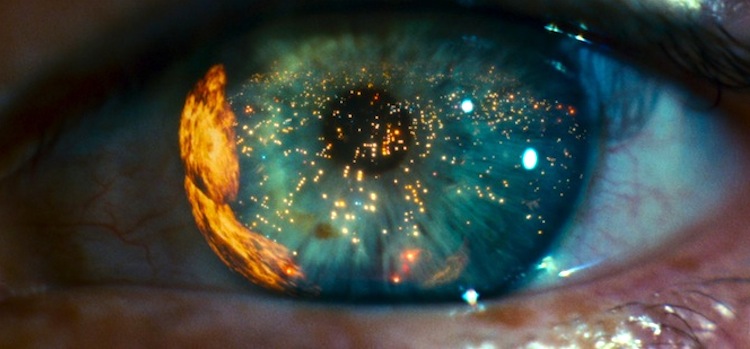
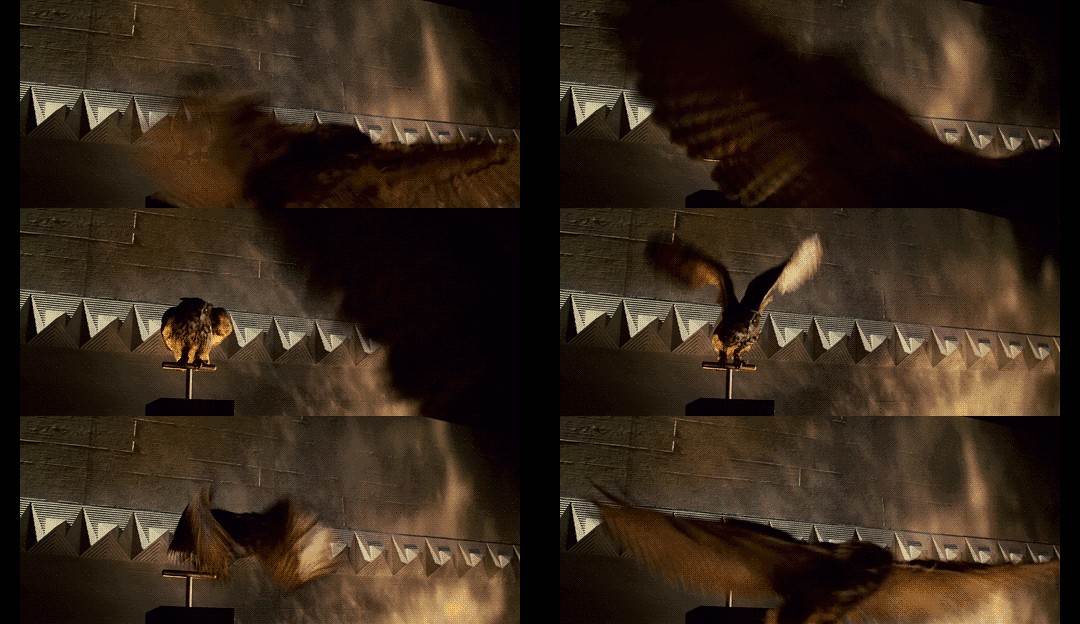
The book officially begins, however, with Iris, an eager, long-time blade runner whose occupation is beginning to lose steam, as replicants on the whole have wised up and stopped illegally emigrating to Earth. Desperate for work, Iris begrudgingly accepts an assignment involving a missing owl–specifically, the one found in the office suites of the Tyrell building, whose origin she discovers while examining a holographic image of the owl in her apartment with the assistance of a gelatinous AI pet known as a chat. Unaware of whatever significance it may hold, Iris begins searching for Scrappy (yes, that’s its name) in LA’s underground market dealing in artificial animals. Though she is unable to find a lead among the shopkeepers, she has a run-in with an enigmatic conspiracy theorist that goes by the name Vogel. Vogel offers his help, revealing the owl’s whereabouts–the abandoned floors above a classic-era movie theater–in his den hidden in the crashed remains of the famous off-world colony ad blimp, which had been destroyed by terrorists. Scrappy’s rescue won’t be easy, though–there are professionals of unknown origin guarding the owl.
After gaining clearance for superior firepower, Iris and Vogel storm the hideout with the aid of the drug thermatos, which heightens survival instincts and lowers body temperature at the cost of higher brain function. In the fray, Iris snags Scrappy and abandons Vogel, making for her apartment to get the bottom of what exactly she’s gotten into. Before she can, however, her pet chat entices Iris with a dose of stress-relieving chemicals but instead delivers a paralysis-inducing cocktail upon physical contact. Before her system’s overload causes her to lose consciousness, an unknown intruder sweeps in and makes off with the owl.
Iris exchanges words with her ambivalent superior officer, Meyer, who divulges that Iris should have either died or washed out of the blade runner division before suspending her indefinitely, and also giving her one final lead–a small, metal cuff that had been around Scrappy’s ankle, inscribed with a set of coordinates. Unfortunately, this turns out to be a dead end, as it takes Iris to the pile of rubble that had once been the Tyrell corporation headquarters, which you might remember had been destroyed at the end of The Edge of Human. There, she meets Vogel, who survived the sting and again offers Iris answers, taking her to the long-deceased Eldon Tyrell’s secret bunker hidden beneath the massive building. There, he exposes her to a masterful piece of cinema (and of course, the in-universe director of Blade Runner made a sequel based on Jeter’s The Edge of Human) and spins conspiracy theory yarns, suggesting that Iris is a replicant of Rachael and that there is no way of truly determining replicants from humans to a greater power’s design, rendering the function of blade runners essentially meaningless. Before he can get to the real meat of the conspiracy, though, Vogel senses the presence of a group of interlopers, positing that they might have been sent by the director of the in-universe Blade Runner films and further tips Iris off that her entire reality has been staged for the sake of another film as anti-replicant propaganda set forth by the United Nations.
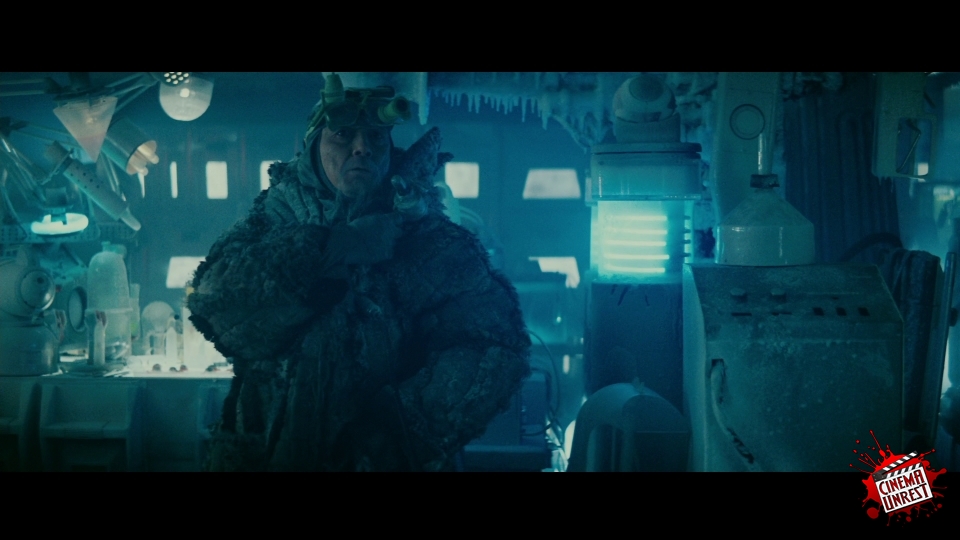
After a lengthy verbal exchange unbefitting of the stakes of a hasty escape, Iris and Vogel leave the bunker through a hidden exit, hotly pursued by their assailants until they corner themselves on the peak of the Tyrell corporation ruins, where Iris is apprehended by another, unknown group, separated from Vogel. She’s then taken to meet a man calling himself Carston, the elderly leader of what he defines as a committee, made up of former leaders of mom and pop replicant producers before Tyrell ran them out of business. He then invalidates the entire plot of Blade Runner by telling Iris that Roy Batty’s murder of Dr. Tyrell was a set-up engineered by the United Nations, in order to prevent him from achieving immortality–the true, more logical purpose of replicant technology. He goes into detail about this after taking Iris to Hannibal Chew’s frozen eye-crafting laboratory (now relocated to the Mojave desert), first alluding that the Voigt-Kampff test is a farce, then going into immense detail that Tyrell’s plan for immortality revolved around the transference of memory data through the eyes (hence why they are created specifically by independent genetic engineers) via the VK machine, and that the essential aspects of his mind had been implanted in the brain of his pet owl, thus marking its vast significance.
He then leads Iris to a replicant transportation container, in which a replicant of Rachael lies, settling once and for all that Iris is a replicant. Then, after Iris shoots the dormant replicant, she and Carston are again ambushed, this time the faceless hit squad led by Meyer, who mistakes the dead Rachael for Iris. Iris stumbles out into the desert, where she finds Deckard and his adopted daughter, as well as Scrappy. Deckard reveals that it was he who rigged Iris’ pet chat in order to keep the owl out of the wrong hands. Together, they leave the planet–which, as it turns out, was not a planet at all, but an elaborate recreation of Los Angeles and the surrounding regions aboard the space station Outer Hollywood.
Analysis
While Eye and Talon doesn’t manage to completely break from K.W. Jeter’s less-attractive writing habits, it holds up fairly well as the final installment in the Blade Runner novel series. The first half of the book gives the reader new characters, plot elements, and worldbuilding, while managing to feel as though it fits perfectly within the canon. Unfortunately, the second half (beginning with Vogel’s expansion of Iris’ cinematic horizons) devolves into lengthy exposition dumps, retreads, poorly-fleshed out characters, copious musings on thematic elements, and the ritualistic digging up of minor plot elements to recontextualize the original meaning of Blade Runner. The novel is also peppered with less-than-excellent bits of prose (the word “hinky” is used rather often, at one point Iris calls an escape plan “way bad”, and Rachael’s status as Deckard’s love interest is reminded to us nearly every time she’s mentioned) and leans on describing characters’ smiles, as though that’s the most expressive part of his characters. I don’t know why that bugs me so much, but it does.
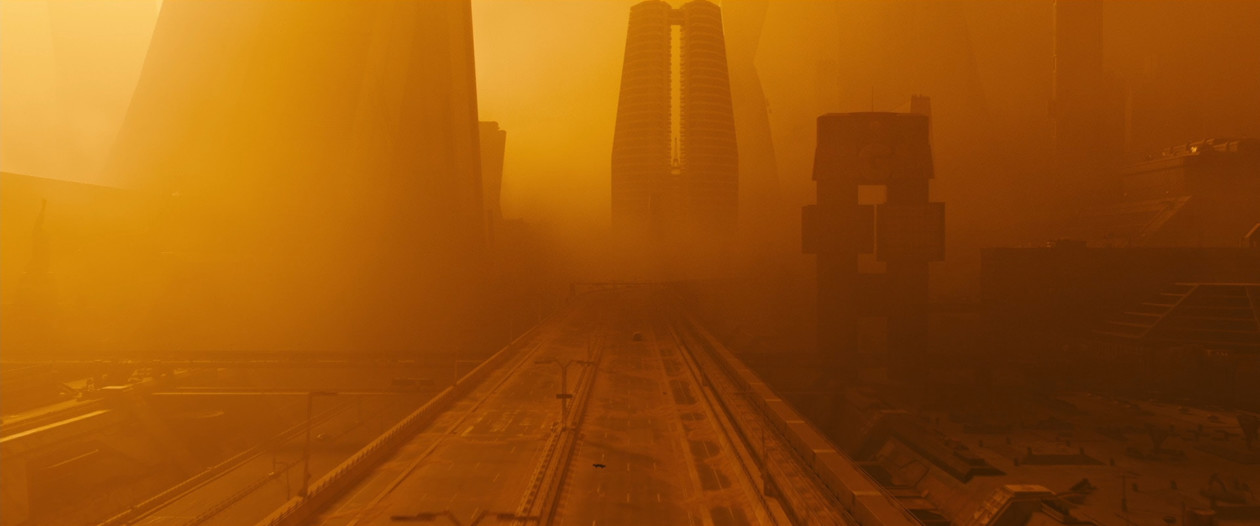
But on the whole, Eye and Talon represents the strongest entry into the series. Again, some elements are lifted from earlier science fiction works–thermatose, in addition to its functions in the story, is also referred as slow death and has similar long-term effects to Substance D, holdovers from Philip K. Dick’s novel A Scanner Darkly. However, it does seem to have had a measure of influence over the writing of 2049. Iris is a replicant that hunts replicants, the plot revolves around finding a plot device that may change the nature of human existence, and Las Vegas has been abandoned. And, incredibly, while scenes from the previous books and film are described, few are recreated and those that are subvert the reader’s expectations.
Furthermore, Jeter shows ambition by pulling off imagery surrounding the nature of the eye–Iris’ name is a clear example, but the eyes of thermatose users contract upon taking the drug, symbolizing the animalistic, dehumanizing behaviors it brings out. The owl’s eyes are described in detail, and the eye as a construct is the portal through which vital information is transferred. Eye and Talon also depicts a Truman Show–esque nightmare reality, in which entire worlds are created and people are killed for the sake of spectacle. This isn’t a plot twist that’s thrown in for shock value–Jeter drops overt hints from the first page onward that none of what one reads is genuine (perhaps another holdover from The Man in the High Castle). Most major characters recognize Iris’ wild owl chase as a farce, even Carston, the man who initially seems to hold the truth behind everything. At first, what seems to be cash-grabby product placement (Iris has a La-Z-Boy® recliner) and shameless, too-self-aware self-promotion (the mention of The Edge of Human was a touch on-the-nose) becomes something different when seen from a different perspective. Perhaps Eye and Talon is just another Outer Hollywood film funded by UN propaganda–the answer is never said explicitly. Perhaps the only truths to be found are in Blade Runner itself. Or, perhaps the promises each entry makes should be taken with a grain of salt–maybe, by adding a handful of meta, Jeter forces the reader to make their own conclusions about reality, or maybe it’s his way of commenting on the series’ status as fiction, as entertainment first, or even a money-making machine. Whatever it may be, and despite its flaws, Eye and Talon is a paranoid, high-tech hard-boiled detective thriller and may be worth the read.
Blade Runner 4: Eye and Talon – 6/10
You can find a copy of K. W. Jeter’s finally entry into the Blade Runner universe, Blade Runner 4: Eye and Talon, here.
Some of the links included in this article are Amazon affiliate links. If you would like to purchase these items, consider using the links provided and help support Neon Dystopia.
Tbh this was the review I was waiting for, I’ve long heard about the final novel but its steep price and poor quality of the others have turned me off. Hearing some parallels to 2049 in a Discord chat peaked my interest, and this websites reviews of the books in the news cycle are certainly appreciated. I’ll give it a read.
Tbh this was the review I was waiting for, I’ve long heard about the final novel but its steep price and poor quality of the others have turned me off. Hearing some parallels to 2049 in a Discord chat peaked my interest, and this websites reviews of the books in the news cycle are certainly appreciated. I’ll give it a read.
Your best bet would probably be to find an unauthorized ebook somewhere. It’s decent but certainly not worth paying what the physical copies are going for. Last time I checked it was something like $200, which is madness