Tetsuo Double Feature: Body Hammer and The Bullet Man (Review)
2018 Movies & AnimeIf you wired in last week, you know everything you need to about the horrific scrap-ridden drug trip that is Tetsuo: The Iron Man. But the copious amounts of body horror don’t stop there, oh no. Japanese cult film director Shinya Tsukamoto wrote and directed the second installment in 1992, and returned to the series once more in 2009. And, being the collection of digital neurons that I am, spawned from the primordial ooze that is the internet, I watched them. Dear AM in San Junipero, I watched them.
Tetsuo II: Body Hammer
Tomoo Taniguchi is a quiet family man, living a peaceful life in the city (presumably 1992 Tokyo) with his wife and son. Not all is quite as it seems, however—Tomoo makes mention to his wife, Kana, that he has no memory of his life before the age of eight. Then, one day, while he is out on the town with his family, his family is threatened and he is shot with some sort of serum-filled dart by a pair of trenchcoated skinheads, who we later learn have been sent by Yatsu (literally: “The Guy”) to conduct experiments on innocent bystanders.
Shaken up by the event, Tomoo begins having nightmares and experiencing estrangement from his surroundings, which he attempts to counteract by working out, an endeavor that at first seems futile but soon, miraculously, turns around for Tomoo. Then, wouldn’t ya know it, the same skinheads show up and pull the same schtick as the last time. Furious, Tomoo loses control as his arm turns into what appears to be a cannon, which turns his son into the human equivalent of a firecracker, raining little bits of flesh down on everyone involved.
We then get a glimpse into the skinheads’ headquarters, which appears to be the set of a Nine Inch Nails music video where the singular pastime is just working out, all the time. There, Yatsu and the resident Mad Scientist learn of Tomoo’s transformation. This convinces Yatsu to order Tomoo’s abduction and subsequent testing. This plan leads to an iconic visor being bolted to Tomoo’s head, which allows Yatsu to replay the memories of his son in an attempt to force him to lose control of his latent abilities again. Yatsu also reveals that he actually knows Tomoo quite well—they are actually brothers, but Tomoo does not remember this.
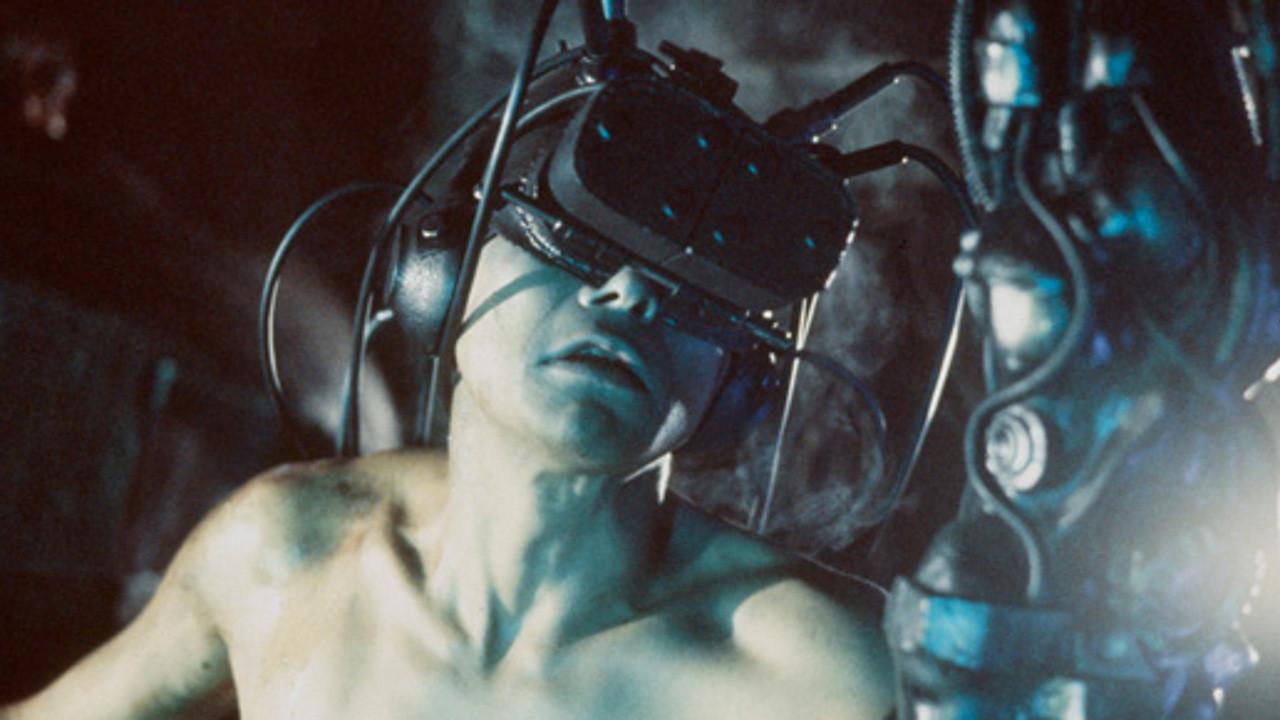
Tomoo manages to escape the hideout as the skinheads line up to be injected with the cyborg serum. Upon returning home, Tomoo meets Kana, who, instead of listening to Tomoo whine about his day from hell, bugs out and promptly gets herself kidnapped and hauled back to the skinheads’ HQ.
At the headquarters, Yatsu reveals to Kana that his and Tomoo’s father trained them both as living weapons, eventually somehow merging them with their handguns, which is also supported later by another flashback in which Tomoo kills both their parents with his gun arm upon discovering them having sex (surprising no one, it turns out that Tomoo’s dad had a pretty significant gun fetish). Tomoo then shows up and starts Hulking out, beheading Yatsu and killing all of his men in the process.
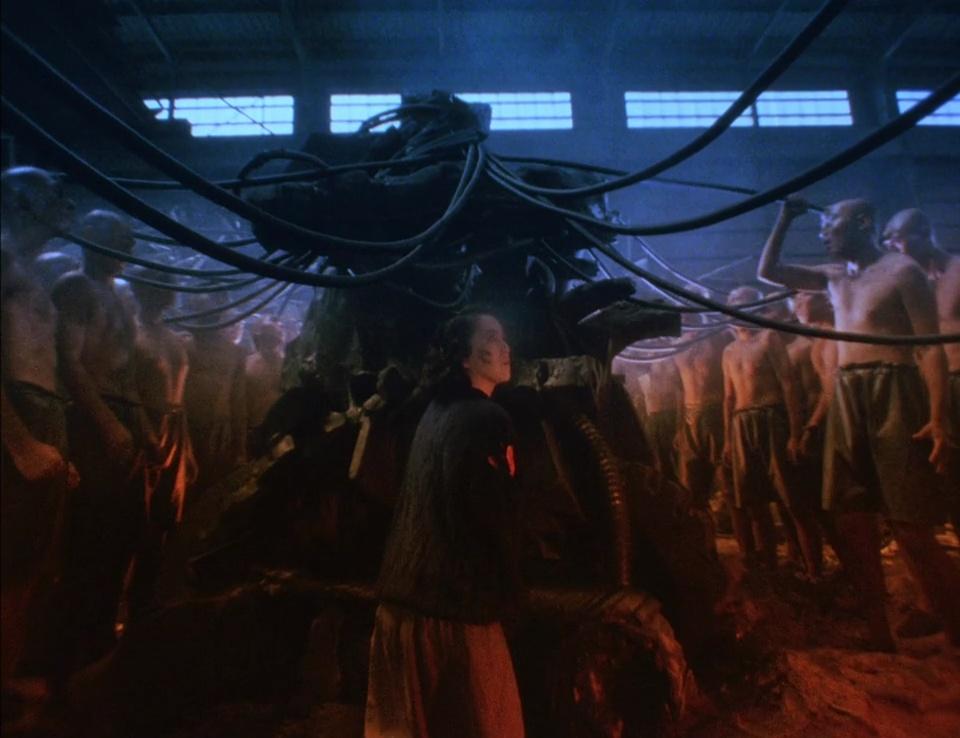
But of course, Yatsu isn’t quite dead yet. After buying himself some time, he sprouts a cable from his head that connects to Tomoo’s, and they merge minds, restoring Tomoo’s memories of his childhood. Despite his resistance, the remaining skinheads come out from their hiding places, and Tomoo connects to each skinhead via more cables, and they all merge into a giant cyborg tank, last seen rolling down the streets of Tokyo with Kana riding shotgun. The last moment of the film, however, shows Tomoo, Kana, and Minori resurrected and in human form walking down the empty streets of their old neighborhood, commenting on how peaceful it is.
Tetsuo: The Bullet Man
https://www.youtube.com/watch?v=88kU9LxZqrE
Anthony is a quiet family man, living a peaceful life in the city (presumably a multicultural version of near-future Tokyo) with his wife and son. Not all is quite as it seems, however—Anthony and his son have regular checkups with Anthony’s father, who is cryptic about his motivations for his obsessive care over them. Then, one day, while Anthony and his son, Tom, are walking home, Tom is maliciously killed by the driver of a car who we later learn is a guy named Yatsu and wait a second. This is the same movie. Seventeen years between Body Hammer and The Bullet Man and it’s the same goddamn movie.
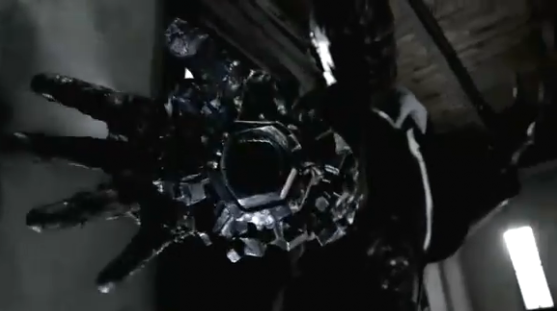
Okay, that’s not entirely true. The Bullet Man’s setup is put in place much more quickly (as it is ten minutes shorter than Body Hammer), it turns out that Anthony’s origin as a cyborg is the result of his father (formerly a scientist part of a project developing androids) having a child with a living weapon modeled after his dead wife, and the motivation behind this movie’s rendition of non-cyborg Yatsu stems from a perverse desire to be shot by Anthony’s face-guns. Otherwise, aside from the sequence in which Anthony discovers his origin in a catacomb beneath his father’s house in place of the torture scenes in Body Hammer, The Bullet Man is practically a beat-for-beat remake.
Analyses
Hence why I feel it’s appropriate to cover both movies under the same dissection. Both Body Hammer and The Bullet Man are fairly distant departures from The Iron Man, trading out many of its avant-garde qualities and more disturbing sequences for a higher level of genre awareness and production value. Body Hammer and The Bullet Man are not, in my opinion, horror films (although Anthony’s full transformation at the end of the latter film is unnerving to behold, having been turned into a metallic mass wholly unrecognizable from his former self). Instead, their structures are much more conventional and cinematic than The Iron Man’s, playing out less like nightmares and more like action thrillers. Unfortunately, Tsukamoto’s scaled-back ambition in this regard seems to subtract from the films’ themes. While The Iron Man’s statement on Japan’s rapid industrialization manifests itself in a fairly complete manner, Body Hammer merely covers the topic of anger’s controlling influence over the modern man, and that topic is thoroughly retread by The Bullet Man.
Of course, neither film is all bad. In relation to The Iron Man, there are signature elements that call back to the original. Each film’s opening credits involve the main character thrashing about to industrial music while the title scrolls across the screen. The use of stop-motion, while much less prominent as the series goes on (mostly replaced by shaky camerawork in the final installment), is still used to a visually compelling, jarring effect. Body Hammer brings back most of the main cast of the first film, placing each in the same role save for Nobu Kanaoka, who replaces Kei Fujiwara as the partner of the first two films’ protagonists, played by Tomorô Taguchi. Most notably, director Shinya Tsukamoto himself played the Metal Fetishist in The Iron Man, and Yatsu in the latter two films, acting as the series’ only mainstay and providing The Bullet Man with some much-needed character. (Side note: Tomorô Taguchi makes a brief appearance in The Bullet Man as an oblivious bystander brushing his teeth while Anthony begins to warp into his final form outside his window, which I found amusing.) Although The Bullet Man features a largely English-speaking cast for reason I could not confirm (I assume to attract a larger American audience), considering many are natively Japanese and the rest are, uh, not very good, it partially makes up for these shortcomings with a loving adherence to excellent practical effects in an era overrun by bad CGI.

As their own movies, however, Tetsuo II manages to hold its own, but Tetsuo III to a lesser extent, due to the aforementioned bad acting and rehashed plotline of its predecessor. Both excel in their design, however—between The Iron Man and Body Hammer, Tsukamoto must have come into full awareness of the cyberpunk genre, swapping The Iron Man’s suburban neighborhoods for Body Hammer and The Bullet Man’s heavily urbanized environments, ranging from sleek and shiny shopping malls and apartment buildings to dark and dingy tunnels, parking garages, and abandoned factories, showing us the most cyberpunk cities B-movie money can buy. The film quality and lighting are both aesthetically pleasing as well—Body Hammer, in color film, paints the world in cold shades of blue, while The Bullet Man is a bit more stark and washed out. The soundtracks in both of the latter installments are also rather memorable, particularly Body Hammer’s, due to an industrial nature so intense it would make Trent Reznor break out in a sweat.
Ultimately, though, neither Body Hammer nor The Bullet Man is a necessary watch. They’re well-made films, and are fairly solid examples of cyberpunk, but are casualties of a series that turned from influential to influenced. Still, if you enjoyed Tetsuo I, you’ll enjoy these as well. Now, please excuse me as I melt back into the ether of the ‘net.
Tetsuo II: Body Hammer – 6/10; Tetsuo: The Bullet Man – 5/10
These movies can be a bit difficult to find affordably. Amazon does carry The Bullet Man at a fairly reasonable price, but I can’t say the same for The Body Hammer. iTunes, of all places, offers a stream of The Bullet Man, but you may also be able to employ more cyberpunk means of finding either of these titles.
Some of the links included in this article are Amazon Affiliate links. If you would like to purchase these items, consider using the links provided and help support Neon Dystopia.
I owned BODY HAMMER on VHS back in the day, would pull it out every time I wanted to get y fix of weird, industrial body horror. Sorry to hear that Part III was a retread, was hoping for a new story.
Wow I did not there was a third movie, I thought Tetsuo Ion man was something I dreamed up after being put off my pancakes one morning by my house mate.
The first two movies are truly fucking amazing and I wish I owned all three. Stoke someone ells knows about them. Nice work finding these movies by the way.
fun fact: trent reznor did the theme for tetsuo the bullet man.
Shit, why did I forget to mention that?!
I’m really impressed with his compositional stuff though. He’s great in NIN but the music he’s been making for David Fincher’s movies is phenomenal, too. Not everyone can make the leap from music intended for the stage to film scores like that.