What is NowPunk?
2018 Books & Fiction“Exciting times in the world right now. Exciting times.”
-Mr. Robot
By day, I live the glamorous life of a clerk in a public library. This fine institution I work at classifies William Gibson’s Blue Ant trilogy in the “Mystery” section. Although I have given up a long time ago to try to explain to stubborn librarians why those novels are not detective fiction and should be in “Science Fiction”, I still need to breathe in a paper bag every time I come across that specific “Mystery” shelf where Gibson is and shouldn’t be.
Since you are reading this, you certainly are not stubborn librarians. I would like to take this opportunity to discuss the concept of “nowpunk”.
There are mainly two types of cyberpunk derivatives: retrospective variations, such as steampunk, dieselpunk, atompunk, and the list goes on; and thematic variations, such as biopunk, post-cyberpunk or tech noir. Retrospective variations tend to focus on aesthetics, as the “punk” element is mostly found in anti-heroic protagonists and makeshift technology. Thematic variations, on the other hand, are set in the same near future as cyberpunk but differs in their way to depict the world. While biopunk is still “high (bio)tech / low life”, it often slides into body horror or super-soldier narratives. Tech-noir and techno-thrillers are plot-focused and tend to be light on scientific speculations. Post-cyberpunk is harder to gauge, as it tends to describe a world of “high tech and not-so-low life”, the characters often holding official positions, such as cops, corporate executives, scientists, and so forth.
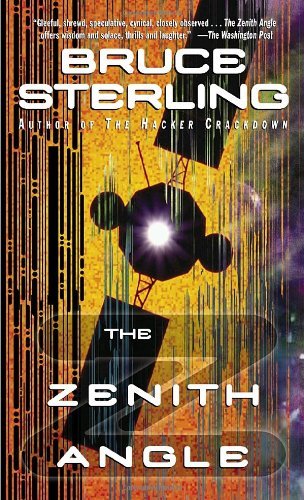
In 2005, referring to his (then) latest novel, The Zenith Angle, Bruce Sterling coined a new derivative subgenre, nowpunk, to describe fictions that feel like cyberpunk but are set within a technological paradigm and a timeline that do not differ from the ones that we live in. It’s a catchy buzzword that certainly fits our reality, but could there be more to the concept than just “cyberpunk is now”? Contrary to more traditional science fiction, the speculative function of cyberpunk is mostly about short-term anticipation, extrapolating from what already is, and it follows that many of its early foresights ended up accurate, which brings us to now and the feeling of cyberpunkness that we have.
The closeness of cyberpunk to our daily reality is nothing new. About the writing of All Tomorrow’s Party (1999), Gibson told the Toronto Star that he “was working so close to the present it’s almost an alternate present”, and yet, the Bridge trilogy is obviously set in the future. That statement, however, applies perfectly to the Blue Ant trilogy. In a 2003 interview with the LA Times, Gibson has said about the 9/11 attack and its consequences: “I had this very surreal, unpleasant, Kafkaesque sense of the world that I had been blithely telling interviewers was incomprehensible and catastrophic and terrifying – and suddenly it was, […] It was like the universe had called my bluff.” (Both Gibson’s quotes are from Laura Lambert, The Internet: A Historical Encyclopedia, vol. 1: Biographies, ABC-Clio, p. 113)
Sterling’s The Zenith Angle and Gibson’s Pattern Recognition are set in the aftermath of 9/11, an event that has without any doubt largely contributed to the paradigm shift from the late modern/early postmodern society of the 20th century to the fully blown postmodern information age of the 21st. From a military perspective, one of the characters in The Zenith Angle refers to the 9/11 fourth plane in those terms:
“[…] They missed the White House because passengers attacked them inside the fourth plane. Their families got through to them on cell phones. […] That is gonna be the future of this story, Van. It’s phones versus razors. It’s our networks versus their death cult.” (Bruce Sterling, The Zenith Angle, p. 48. The emphasis on “future” is Sterling’s.)
Indeed, 9/11 has redefined the scale of war: the weapons of the 21st will not be stealth bombers but anything: airliners, kitchen knives, minivans and even something as ridiculous as underwear bombs. War used to rely on industry, now anybody with an Internet connection knows how to blow up a significant amount of human beings. For worse rather than better, the street has found its own use for things.
Does that means, though, that all contemporary fiction is cyberpunk derivative by default? Of course not. Does that means that Gibson’s or Sterling’s contemporary works are not science fiction? That’s the tricky part.
What differs in nowpunk from techish contemporary fiction, such as technothrillers like the Bourne series, 24, or even the X-Files, is that although the technology element plays an important support role in those fictions, the plot revolves around vengeance, conspiracies, and evil masterminds. In nowpunk, science is an agent. The stories being told are still universal, basic ones of quest, revolt, identity crisis and love, but technology, or more accurately science understood as knowledge and its applications, such as objects of modern life, are part of the plot rather than simply being there for the sake of realism. The use of the Internet in Pattern Recognition is not merely a communication tool, it is part of the nature of the work of art chased by Cayce Pollard. In Spook Country, GPS is used as a tool to create art and as a surveillance infrastructure, and both are interlinked by the character who controls them, but also by the fact that they both are the objects of Hollis Henry’s quest.
The roots of nowpunk lie in the fictions of J.G. Ballard, who famously wrote that “the only true alien planet is Earth”, that is to say, that while space fiction had fallen into tedious conventions, we could never exhaust the discursive possibilities of our very own strangeness.
“The biggest developments of the immediate future will take place, not on the Moon or Mars, but on Earth, and it is inner space, not outer, that needs to be explored. The only true alien planet is Earth. In the past the scientific bias of s-f has been towards the physical sciences – rocketry, electronics, cybernetics – and the emphasis should switch to the biological sciences, particularly to imaginative and fictional treatments of them, which is what is implied by the term science fiction.” (Ballard, “Which Way to Inner Space?”, New Worlds, May 1962, p. 117)
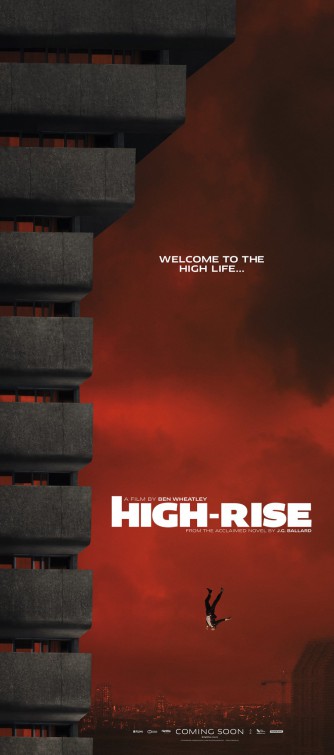
Trained as a psychiatrist, Ballard was interested in how the human mind is “programmed” and in how it is affected by the various stimuli of the modern world. His most experimental novel, The Atrocity Exhibition (1970), is a patchwork of short stories loosely connected around a crazy character trying to start World War III by displaying geometric patterns. The Concrete trilogy (Crash, 1973; Concrete Island, 1974; High-Rise, 1975) is set in contemporary England, with no hint toward anything outside of the reality as we know it. The scientific speculation in those novels is to be found in the psychological side-effects of various objects of the modern life: cars, highways, garbage, parking spaces, processed food, housing. While The Atrocity Exhibition and Crash still holds a hazy psychedelic uncertainty about what is really going on, Concrete Island and especially High-Rise are as grounded in mid-seventies consumerism as it can be.
The economy in cyberpunk fiction as well as in Ballard’s is rooted in what postmodernism theoretician Fredric Jameson refers to as “late capitalism” (Postmodernism, or, the Cultural Logic of Late Capitalism, 1991). Modernity was dominated by the idea of progress, and industrial production was the favored way to achieve the advancement of society. As modernity seems to have reached some sort of plateau, postmodernity turns progress inside out and the focus of industry is not so much to produce objects that we need and then sell them, but rather to produce objects and afterward sell us the need for them. No progress is accomplished by Internet-connected toasters. What is sold to the customer is not an innovation that is needed, it is the idea of innovation. It’s new, therefore it must answer a need that I have, even though I don’t know which one.
Thus the importance of technological advancement in postmodernist fiction is less about what objects do as about what they mean. This could be qualified as the semiotics of tech: what it means, not what it does. “Internet of Things” objects are qualified as “smart”, which of course everyone wants to be, and now one can “buy smart” instead of “be smart”. “Smart” objects are relevant because their functions say something about our visceral need for convenience and control, even though the results are the exact opposite, which is, of course, high tech and low life. Ballard’s fictions, as complex as they are, follow a simple and linear cause-to-consequence circuit: input modernity, output madness. Cyberpunk obviously takes more than just a hint from Ballardian dystopias, but the relationship of the former to modernity and capitalism is more intricate than the latter. The semiotic circuit of cyberpunk is a closed system which feedbacks on itself, and the same is true in nowpunk. The military fashion in Zero History is a very good example of this kind of circular dynamic : the military looks becomes hip, therefore it permeates the world of casual fashion; designers take it out of context, sell derived clothes on the street; the military updates their looks to attract recruits; designers sell their derivative creations to the military, and the cycle starts again. The brute force behind Blue Ant (the company), Hubertus Bigend, is not interested in the finality of consequences, but rather wants to harness the very dynamic of cultural inputs and outputs.
Similarly, The Zenith Angle opens with a scene where two characters observe a satellite through a telescope. But satellites are sending back telecoms and surveillance information, thus in a way they also observe us. Consequently the novel transports the reader back-and-forth between the closed and abstract world of computers, and the material and open vastness of space, as it is telling the story of Dr. Vandeveer, a computer scientist who volunteers, in a post-9/11 urge to do something, to fix both the chaotic structure of the now-obsolete 90’s Internet and a specific spy satellite flawed in design. Vandeveer finds himself in the position of dealing with top-of-the-line software and billion-dollar hardware, and yet he still lives the low-life of cyberpunks, alone on the road, in a top-secret underground bunker or in a down-and-out apartment in the bad part of D.C., away from his brilliant astronomer loving wife and his newborn son.

“That there,” Dave said, “is what everybody wants me to be. Straight job, mortgage, wife, kids, the whole package. What kills me is I sit here and look at it and I still feel, I don’t know. Like I’m missing out on something.” “They program you to feel that way,” Bobby said. “With TV and school and movies.” (Lewis Shiner, Slam, p. 185-186)
Lewis Shiner, Mirrorshades alumni and Sterling’s co-conspirator in the publishing of the Cheap Truth fanzine, published Slam in 1990, a novel about skateboarding. Early on the main character, middle-aged slacker Dave freshly out of prison following a tax fraud conviction, reads a copy of Omni magazine, the science fiction magazine that first published most of Gibson’s short stories.
“Dave stopped to look at the underlined phrases in an article torn out of Omni: ‘…artifacts that accidentally dispose the culture toward anarchy. The skateboard is one… and so… is the microcomputer.’” (Shiner, Slam, p. 44) [The exact reference is “Online Anarchist: Artificial Intelligence” by Fred Hapgood, Omni, vol. 10 # 6, March 1988, p. 106. The article is a portrait of hacker Tom Jennings, the creator of FidoNet.]
Indeed, Dave will somehow get mixed up with a teenage gang of skateboarders and loosely surf an anarchist “bulletin board”, as web servers were called in 1990. The computer, in Slam, does not affect the plot but exposes a framework for freedom.
“He finally turned the computer off with his pulse racing. He felt like some African explorer who’d stumbled onto a lost kingdom. Except this kingdom spanned the American continent and most of the world, its elect citizens chained together by fiber-optic cable. And instead of being a remnant of the past, it was an island of the future. How many other kingdoms were there, surrounding him invisibly even now?” (Shiner, Slam, p. 99-100)
This invisible geography, this parallel society that is the network is one key element to cyberpunk, and to highlight the fact that it is already there in our present is what makes nowpunk. Slam reminds us that the Internet once was the Wild Frontier and that any new object is first the plaything of those in the know before corporate capitalism puts its hands on it. And just as the excerpt from Omni says, in the late 80’s and early 90’s, that freedom was true for both computers and skateboards. Following that assertion, skateboarding is described in Slam with the same utopian undertones as computers were in the previous quotation.
“It didn’t matter if Dave understood or not. The kids didn’t need his approval. It was a pocket universe where they could accomplish something real, something on their own. They couldn’t do that in the adult world, the world in which Dave was supposed to be rehabilitating himself. (Shiner, Slam, p. 194)
To this day skateboarding still holds some sort of bad reputation, despite major international events and millions in sponsorship. The reason why snowboarding made its way to the Olympics and not skateboarding is that you can’t snowboard in the streets (not even in Montreal). Snowboarding and surfing require specific physical conditions, and therefore they can be easily circumscribed and controlled by the authorities. Skateboarding is uncontrollable, and therefore dangerous. In contrast, the neatly framed American Dream is to be opposed to the open world of skateboarding and the burgeoning public Internet.
“Wheel of Fortune was on TV. It was a very popular show in Bastrop FCI. The players clapped for themselves and cheered self-consciously as the wheel went around. After the wheel, they took turns at Hangman, as Dave used to play in grade school, and then the winner got to go shopping right there on stage. […] It was the American Dream, shrunk down to fit a 19-inch screen.” (Shiner, Slam, p. 183)
“All the great themes have been used up and turned into theme parks.”
(Pump Up The Volume)
The movie Pump Up The Volume (1990) features a young Christian Slater (a.k.a. Mr. Robot) portraying shy high school student Mark Hunter who becomes pirate radio DJ “Happy Harry Hard-On” by night. Mark has re-purposed the shortwave radio that failed to keep him in touch with faraway friends, and now broadcasts venomous and obscene comments about life in high school, music, society, and sex. Chaos ensues. Despite the central role of communication devices (radio, phone, mail, and television), the movie is not so much cyber, but certainly is very punk, filled with teen angst and generation clashes. Its relevance to the present article, though, is that it goes beyond the usual teen movie drama and offers a bona fide critical analysis of late 20th century America, where ideologies are marketed and teenagers are programmed to act as machines.
“Consider the life of a teenager, huh? You have parents and teachers telling you what to do. You have movies, magazines and TV telling you what to do but you know what you have to do. Your job, your purpose is to get accepted, get a cute girlfriend, think up something great to do for the rest of your life. What if you’re confused and can’t imagine a career? What if you’re funny looking and can’t get a girlfriend? You see, no one wants to hear it, but the terrible secret is that being young is sometimes less fun than being dead.” (Pump Up The Volume)
But Hard Harry has something to oppose to this, in the form of an early reference in pop culture to memetic, the theory of idea transmission that has now spiraled down to the omnipresent “meme”.
“I like the idea that a voice can just go somewhere, uninvited, just kind of hang out, like a dirty thought in a nice, clean mind. Maybe a thought is like a virus, you know? It can kill all the healthy thoughts and just take over.” (Pump Up The Volume)
Just as skateboarding was once resistance to social programming by the simple act of being practiced, speaking your mind is affecting the cultural flow in Pump Up The Volume. Hard Harry’s demise spawns legions of copycats, and as Slater states in this 2015 interview (note the hint towards Mr. Robot at the end), what was then pirate radio has now mutated into podcasts and blogs. It is not so much the need to reach others as the need to express oneself that matters. Punk, cyberpunk, and nowpunk are not about organized revolution, they proceed from the anarchist standpoint of being outside the system, watching it go, acknowledging that it is messed up and trying to make do with what you can. Bobby, one of Shiner’s skateboarders, sums it up nicely:
“You can’t sit around and cry because they cut down some trees and pave everything. Concrete is radical. Concrete is the future. You don’t cry about it, man, you skate on it.” (Shiner, Slam, p. 104)
Pump Up The Volume is first and foremost a subversive coming-of-age drama and to call it nowpunk, let alone science fiction, would be a stretch. However, it informs to some extent the current masterpiece of nowpunk, Mr. Robot. Both works revolve around socially inadequate young men with revolutionary, out of control alter-egos. Mr. Robot’s speech in season one finale is quite reminiscent of the rants of Happy Harry Hard-on, and sure, that’s because they are delivered by the same actor, but what is actually being said about society is stunningly similar.
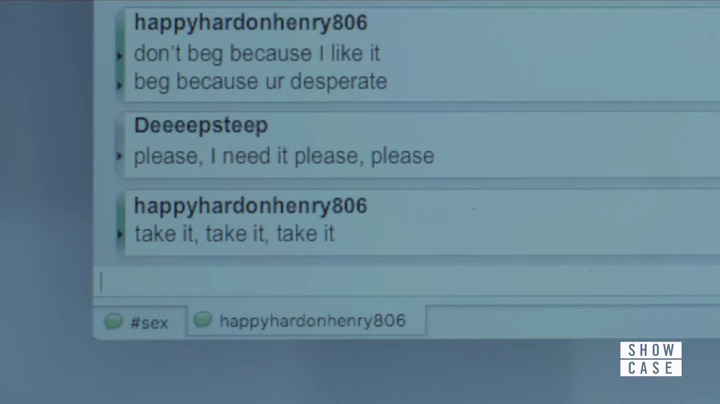
Right from the start, Mr. Robot strays from the usual hacker narrative of cracking the code, breaking the firewall, storming the data bank. There is, all things considered, very little actual hacking in the whole series, and that is the specificity of nowpunk, inherited from the cyberpunk it is derived from, on which I would like to put the emphasis. Technology is omnipresent in nowpunk fictions, not to expose the public to the actual tech but to offer a referent to a depiction of the human world as a logical circuit, and that is what sets nowpunk apart from contemporary fiction. The main character, Elliot, considers that “people make the best exploits” and consequently he “hides his source code”, so well in fact that he fails to hack himself back to reality and has to retro-engineer his personal history in order to find out who he actually is. Acting on a similar philosophy but executing very differently and with a different goal in mind, Wellick, the antagonist, tries to “hack” his way up the corporate ladder, using people as terms to modulate in an algorithm, as is shown by his telling to Elliot that he is “the one constant in a sea of variables”. In season two, Elliot tries to recompile his mind by building a redundancy, every monotonous day is a new system duplicated from the one that precedes it. As for Angela, the female lead caught between the hackers and the corporate world, she acts as a virus, first infecting AllSafe, then the judiciary procedure against Colby, and in the end even E-Corp.
The hacker group fsociety meets in a derelict game arcade, and Elliot meets with Mr. Robot in the creepy ferris wheel of the Coney Island Boardwalk, a sort of intermediary location between the numbing theme parks invoked in Pump Up The Volume and a sideshow for punk lovebirds and freaks. Similarly, the skateboard was designed as a toy and was used accordingly until its subversion by the Z-Boys, those teenagers who gave birth to modern skateboarding by riding in the empty pools of Venice Beach. As portrayed in Shiner’s Slam, skateboarding offers a dynamic utopia outside the stiff work & wages system. Fun breeds rebellion. Just as the pools of drought-plagued California, the mindless Fun Society, as the original name of the arcade was, is dead and the kids are left to play with its corpse. The arcade is the intersection of fun and crime, but it’s also a place where the promise of a society of leisure meets a worn-out past. What used to be shiny and bright and full of happiness is now the location of the very dangerous game of serious black hat hacking.
Other locations in the show also carry a symbolic weight, as they embody thematic nodes in the cultural circuitry in which the characters evolve. AllSafe is a no-mans-land between corporate security and the hackers, a physical sandbox in the data war. Blank’s Disk, the data retrieval center where Elliot encounters hacker mastermind White Rose for the first time, is a place where the broken can be fixed and the lost can be found, or maybe not. Even the name of the shop is highly significant: a blank disk is the exact opposite of data recovery. Steel Mountain and the various E-Corp facilities where the paper records are stored represent interfaces between the physical world and the digital archives. The prison in season two acts like an on/off switch that shuts off Elliot’s perception of reality as the slammer’s door closes on him. Susan Jacobs’ smart apartment is the epitome of technically enhanced high-life, yet the black hat low-life hackers temporarily set base there. Almost a negative image of Jacobs’ apartment, the Red Wheelbarrow is the ideal of corporate fast food consumerism, filled with numbed low-life wage-slaves, but at the same time, it is a fence for the most powerful crime syndicate of the world.
Another highlight of Mr. Robot is that the show avoids romanticizing revolution: the aftermath of the hack is realistically as worse as before. The alternative economy that replaces global banking is, in fact, a redundancy, as people don’t know any better than to re-apply the convenient and comforting familiar structure. Society is depicted as a system in which no single element is central enough to affect the whole circuitry. Focus on one goal and you lose the big picture, focus on the big picture and you must sacrifice something precious. Angela must give something to Colby in order to reach E-Corp as a whole. But even this kind of transaction is pointless in the end. The machine moves too fast, “now” is always slipping out of hand.
“Society is mutating so rapidly that anyone over the age of twenty really has no idea.”
(Pump Up The Volume, 1990)
When is now? “Now” tries to reach tomorrow but only achieves yesterday. When you started to read this article, your objective was to have read the article. The future of your now is to put your present action in the past. Now is always moving, never reaching its destination. Nowpunk does not describe the world as it is, nor the world as it could become (as cyberpunk does), but instead, it depicts the world as it is becoming. Remember the emphasis on the word “future” in the Zenith Angle quote about 9/11 consequences, and with that in mind, allow me to twist a little bit the words of Ballard: “The only true future is Now”. Max Headroom was set “20 minutes into the future”. Well, nowpunk is set “20 seconds into the future”. In fact, Bigend would settle for seven seconds… Nevertheless, it’s still prospective speculation, even if only on the infinitesimal scale.
“I don’t care about History
‘Cause that’s not where I wanna be”
The Ramones, “Rock ’n’ Roll High School”, 1979
Although “cyberpunk is now” is a mostly accurate description of the current state of the world, the “nowpunk” subgenre is not a simple expression of that reality, but instead, as I hope to have shown in this article, constitute a specific discourse with its own poetic derived from the cyberpunk systematic analysis of postmodernity, transposed back from a futuristic setting into contemporary times that may not be as familiar as we would like them to be. Nowpunk, then, is not quite a retrofuturistic offshoot of cyberpunk, neither is it a thematic variation, as it exploits the same tropes of technology and system criticism at the core of cyberpunk. I would argue that nowpunk is neither to be reduced to “contemporary fiction”, as it is sometimes blandly described, nor “contemporary historical fiction, written while the history is still being lived” (Laura Lambert, The Internet: A Historical Encyclopedia, vol. 1 : Biographies, ABC-Clio, p. 224), but rather “contemporary science fiction, written while the future is still becoming”.
I would now like to propose a definition: Nowpunk is a specific type of fiction, set in a contemporary setting, in which existing scientific elements play a prominent role, essential to the plot. Those elements can either be derived from hard sciences (computers, phones, biotech, astronomy) or from cultural sciences (fashion, marketing, pop culture, skateboarding, media). They are then combined in a way to express the otherwise invisible flow of cultural data and manifest a complex social structure, roughly following the pattern of input-output-feedback similar to a cybernetic system, with an attention to what it all means for the future. Concrete is the future for Slam’s skateboarders, high tech and low tech are the future of war in The Zenith Angle, and Bigend is already living the future.
The Blue Ant trilogy and The Zenith Angle are about war and about its relations to art (Pattern Recognition), economics (Spook Country), fashion (Zero History), and high tech (The Zenith Angle). Slam and Pump Up The Volume are about youth and the potential it holds despite being deemed as powerless. Mr. Robot is about, well, just about everything: individual versus collectivity, personal history versus collective history, computer (in)security, global economy and small consumerism, family, alienated youth, mental health, trust and friendship, drugs, politics, organized crime… and about how one of those affects the other. The point of a nowpunk narrative is not so much how a character evolves from point A to point B, but rather how the character interacts within the cultural system, consciously or not.
As to whether it is science fiction or not, I’ll let the final word to Jim Ballard:
The first true s-f story, and one I intend to write myself if no one else will, is about a man with amnesia lying on a beach and looking at a rusty bicycle wheel, trying to work out the absolute essence of the relationship between them. If it sounds off-beat and abstract, so much the better, for science fiction could use a big dose of the experimental; and if it sounds boring, well at least it would be a new kind of boredom.
(Ballard, “Which Way to Inner Space?”, New Worlds, May 1962, p. 118)
If you’d like to check out any of the media mentioned in this article you can find links to them below:
Mr. Robot Television Series
The Blue Ant Trilogy by William Gibson (Pattern Recognition, Spook Country, Zero History)
The Zenith Angle by Bruce Sterling
The Concrete Trilogy by J. G. Ballard (Crash, Concrete Island, High-Rise)
High Rise Movie
Slam by Lewis Shiner
Pump Up The Volume Movie
Some of the links included in this article are Amazon affiliate links. If you would like to purchase these items, consider using the links provided and help support Neon Dystopia.
Amazon? Seriously man?!
Let me guess, pal. You’re the kind of guy who’s charitable enough to donate to independent websites. In fact, I’d bet good money you’ve never torrented anything in your life. Amazon is a hard enough megacorp to avoid on its own but if someone finds something obscure through us, they very well might only be able to purchase through that money-making machine. If they use one of our links then at least some of that money is coming back to us, paltry as it may be. And, if you paid more attention, you might have noticed we don’t have ads on this site, so we don’t get paid for any of the site’s content, upkeep, and moderation unless you pay us.
And for the record, your username is spelled wrong. You might have known that if you’d actually read the book instead of just watched the movie.
On this issue I stand by my editor.
From « The Future of Neon Dystopia » post ( https://www.neondystopia.com/uncategorized/the-future-of-neon-dystopia/ ) :
“Besides technical support, Neon Dystopia has been, and is, single-handedly run by one person with basically no funding. I’ve been resistant to implementing classic monetization strategies on Neon Dystopia for various reasons. Here is my basic philosophy on monetization: if we are going to monetize Neon Dystopia, it has to be in support of building a cyberpunk community and not at that community’s expense. We don’t want to turn our readers into a product. This means we don’t want to implement invasive ads that track you across the web, like so many other sites do. This takes away from the site aesthetically but also flies in the face of the punk ideology that is ad-averse. We’ve implemented Amazon Associates on the site, although we acknowledge this supports a megacorporation and that the community may also have qualms about this. We decided to go forward with this strategy because we know that most people now utilize Amazon for a great deal of their media purchases anyway, and we thought we would provide people a way to support Neon Dystopia in a non-invasive fashion if they were going to use Amazon anyway. This doesn’t bring in much revenue, but a little is better than nothing. We do have a store, and we have and want to continue to use this as a vehicle for supporting cyberpunk artists in the community. The store has brought in some revenue, but from the perspective of upkeep, worked hours, and endeavors for growth, the shop falls short of supporting the site financially. Everything else is out of pocket, paid for by my day job.”
Dang dude. I was going to write an article like this but you took the words right out of my mouth and turned them into something much, much better.
Still, I’d argue that the “punk” moniker should just evolve into something that includes modern technology and media instead of simply referring to a culture built around a genre of rock music, but that’s just me. Also, between all of the anti-authoritarian roles Christian Slater has played over the years, I’m surprised he’s not a more notable punk icon.
Thank you, I am very glad to hear that my article has found an echo.
I agree that punk is much more than music, especially when used as a suffix in sci-fi. Since derivatives are usually more about the cyber aspect than the usual punk meaning, more correct designations would probably be « Cybernow » or « Steamcyber », but what fun would that be? It is fun, though, to track genuine punkiness where it is not that obvious.
As for Slater, yeah, totally. I wouldn’t be a punk if I had not watched Pump Up The Volume as a teenager. Once I was done writing the article I watched Gleaming The Cube. That was a laugh.
Wonderful article! It’s good that we are becoming self-concious about a new way to confront cyberpunk and our reality. I wrote an article in portuguese about nowpunk one week earlier than this post, talking about more a more political and metamodernist approach.
I’ll translate it to English soon!
Thank you very much. There is still much more to say on the subject, and I had to make some choices about what to talk about and what not. I really look forward to read your take on this.
If you want, you can google translate this from Portuguese to English while I’m translating myself. I woulf loe to see you opinion https://medium.com/speculous/nowpunk-como-nos-transformamos-em-nossas-pr%C3%B3prias-fic%C3%A7%C3%B5es-38e3a5707e25